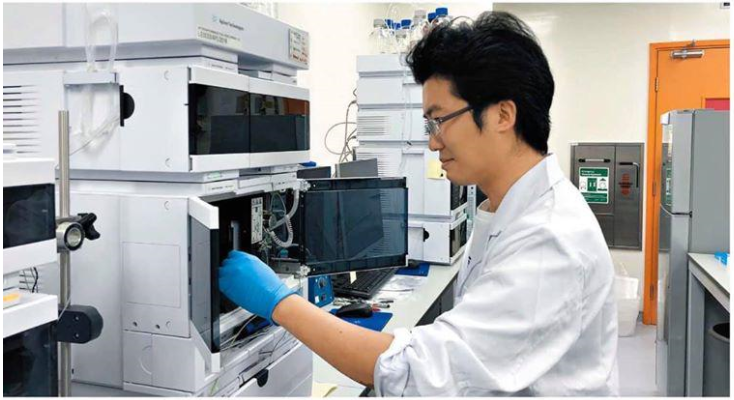
Recent biotechnology stocks have become investment hotspots. However, many of these pharmaceutical companies have no income or profit. How did they develop? CEO and Executive Director Mr. Ian Huen of Aptorum Group, which is based in Hong Kong and listed in Nasdaq (Ticker Symbol: APM), shared his views and insights on the development of biotechnology companies.
The aging of the global population is a major trend. According to the global population forecast published by the United Nations in this year, it is estimated that the proportion of elderly people (over 65 years old) will be about 9% this year, and will reach nearly 17% by 2050, leading to increased medical needs. Mr. Ian Huen, CEO and Executive Director of Aptorum Group took cancer as an example: "Older people have a higher chance to get cancer. For example, Northern Europe has the highest cancer rates worldwide, because the average life span is longer, the risk of cancer is also higher. In India, the average life span is relatively short, and thus the risk of cancer is also lower." In view of this, many governments have introduced various policies to encourage pharmaceutical companies to develop drugs for "elderly diseases", including cancer and Alzheimer’s Disease.
Antibiotic resistance becomes the core of development
In addition to the problem of aging population, Ian believes drugs tackling infectious diseases will also play an important role, “if the history of human infectious diseases is classified into three stages, it can be divided into pre-antibiotic discovery (before 1928), antibiotic golden age (1940 to present), and post-antibiotic era. Before the discovery of antibiotics, the average lifespan of humans was about 40 years. But after the antibiotic penicillin has been used, not only did it saved countless wounded soldiers during World War II, but the average lifespan also continued to increase.”
“However, the issues of the increased abuse of antibiotics and the increased resistance of bacteria will make super bugs more threatening to humans. Studies have shown the main cause of death for cancer patients in India is not cancer but complications after bacterial infection. In addition, British research has also pointed out that by 2050, more patients will die from drug-resistant bacteria globally than cancer.” Besides, with technological advancement, the diagnosis method is getting more advanced, and there are many diseases that need to be treated in the right way. Ian pointed out that there was only one type of breast cancer in the past, but now it can be precisely classified into nine types. Many "orphan diseases" have been identified, each will require active research by pharmaceutical companies.
Excellent Biotechnology Research in Hong Kong
Many people look upon overseas when it comes to medical research. Ian commented that while Boston of the United States is the global biotechnology research center, Hong Kong also possess unique potentials and advantages in biotechnology development that should not be underestimated, “The University of Hong Kong's (HKU) research in the field of infectious diseases and the Chinese University of Hong Kong’s (CUHK) research in the field of gastrointestinal diseases are world-leading.”
“To become a biotechnology research center, good university research, talents with extensive experience in big pharmas and investors are all key requirements. Boston meets the above three requirements. Corporates are the epitome of cities. Hong Kong has good research. I can finance my company and then engage local talents with experience in big pharmas. We can also be the biotechnology research center.” Ian further commented that Hong Kong has lower research costs than the US, besides locals have good academic performance, thus possessing unique advantage in research.
Besides Hong Kong, Aptorum Group has R & D teams in North America, Canada and other places or cooperates with local laboratories. Ian pointed out that pharmaceutical companies in Hong Kong must be "internationalized", “Hong Kong's limited population is insufficient to conduct clinical research. At the same time, local pharmaceutical companies are difficult to reach the level of overseas pharmaceutical companies. Also, the US Food and Drug Administration (FDA) is globally recognized and has high acceptance of new drugs, so research in the United States is necessary.” In April this year, Aptorum Group and A*ccelerate, a subsidiary of Singapore’s Agency for Science and Technology and Research (A*STAR), entered into a US $ 90 million collaboration agreement, with a plan to jointly invest in 20 deep tech ventures in Singapore over the next 5 years.”
Choosing the right research area is a must
When a pharmaceutical company is not yet deriving profit, the progress of research and development reflects the value of the enterprise. However, there is no research guarantee 100% success rate. Ian shared that while Aptorum hires talented people, it also selects the right research area: "For example, we noticed that there have been many failure examples of in the drug development of Alzheimer’s Disease in the past, and also considering the long development time, we would thus avoid this area. At the same time, we are actively researching drug repurposing for rare diseases. Drug repurposing can skip pre-clinical and clinical phase I works and directly advance to phase II. Besides, there are many incentives for drug development for rare diseases in Europe and the United States, and the price can be set relatively high. So by choosing the right area of development, we can achieve higher cost-effectiveness.
The Orphan Diseases Drug Repurposing Platform (Smart-ACTTM, SACT series) is one of the three major pillars of Aptorum Group. Aptorum Group currently has multiple projects in progress. Ian explained the company's strategy from a financial perspective. “Financial investment emphasizes risk diversification, but under extreme conditions, often the trends of different assets tend to be consistent. The Orphan Diseases Drug Repurposing Platform that we are investing into is researching multiple projects targeting different orphan diseases with no correlation between the success rates of these projects, which is beneficial to our risk management.” The company expects that neuroblastoma project under the SACT series will enter clinical phase II and III in the middle of next year.
Biotechnology helps medical innovation
Another pillar of Aptorum group is infectious disease drugs (ALS series). Aptorum Group and the HKU team of microbiologists are working together to study non-antibiotic treatment of Staphylococcus aureus, including methicillin-resistant Staphylococcus aureus (MRSA), which will enter clinical phase I next year. According to Ian, “the current treatment of Staphylococcus aureus requires antibiotics, and the bacteria are prone to developing drug resistance. The R & D team of HKU has proposed a model similar to immunotherapy to remove Staphylococcus aureus's ‘golden armor’ with drugs, so that the human immune system eliminates germs.”
He emphasized that if the study is successful, human-beings will enter the era of post-antibiotics, "the production and use of antibiotics will have a lot of impact on the environment. In addition, new therapies can be taken orally to further reduce medical costs." In fact, the US FDA also attaches great importance to studies on drug resistance and set up a Limited Population Pathway for Antibacterial and Antifungal Drugs (LPAD) to expedite approval of related research. Ian expects that ALS drugs will be officially approved in 2022 or later.
Aptorum Group's third pillar is microbiological research (CLS). Ian mentioned that the current study of CLS and CUHK Gastroenterology is still in the early stages, "there are many different gut microbiota, which have a great impact on every aspect of the body, and may even affect major organs such as the brain, liver, heart, etc. Currently there are so-called Fecal microbiota transplant , but such treatment has yet to become a trend. The R & D team of the CUHK found that the metabolites of the gut microbiota can cause various diseases, such as obesity and metabolic diseases. The approach that Aptorum Group is researching into is the capturing and sequestration of the metabolites.” Currently, a CLS project is focused on targeting obesity, and results have been achieved in animal tests. The company expects to enter clinical phase I by the end of next year.
In April 2018, Hong Kong Stock Exchange reformed and allowed pre-profit biotech companies to list in Hong Kong. Ian recalled that, Aptorum Group decided to list in the United States first because the company had no clinical stage projects at that time and could not be listed in Hong Kong. However, in consideration of some projects may enter clinical stage at the end of next year, Aptorum Group may consider dual listing in Hong Kong.
Long drug research cycle
Biotechnology research often originates from university research. The process from the discovery of a potential new drug to preclinical research is about two years. After that, an Investigational New Drug (IND) application is submitted, followed by clinical trials phases I, II, and III. Phase I focuses on testing the drug safety, which take about 1 to 1.5 years; phase II focuses on testing drug efficacy, which takes about 2 years; phase III observes the therapeutic effect of the drug, which takes 4 to 5 years. If successful, a New Drug Application (NDA) has to be filed to the U.S. Food and Drug Administration (FDA). The research cycles for different diseases are different. For instance, the research on chronic diseases such as cancer and Alzheimer disease can take a longer time, and the development of some drugs does not necessarily require the entire process.
Active Mergers and Acquisitions Deals by Global Pharmas
Global pharmaceutical companies are enthusiastic about mergers and acquisitions in recent years. For example, this year, Pfizer (US Stock symbol: PFE) spent over 10 billion US dollars to acquire Array BioPharma. AbbVie (US stock symbol: ABBV) acquires Allergan (US stock symbol: AGN) at a premium of nearly 50%.
Mr. Ian Huen pointed out that big pharmas nowadays do less clinical phase I and preclinical research work, because it may take over 10 years for drug discovery but fail in the end. Only universities can afford such huge costs for time and resources. At present, under the division of labor in the pharmaceutical industry, universities and small and medium-sized pharmaceutical companies are responsible for the preliminary work, while big pharmas acquire or collaborate after the phases II and III, and are responsible for the later development and commercialization processes.
Rare Diseases
【iM knowledge】Rare disease, also known as orphan disease, means a disease found in very few people, and according to the definition of the United States, means a disease with less than 200,000 patients in a population of 300 million.
Author: Dicky Tse, CFA
Source: iMoney
Disclaimer: This is an English translation of the original Chinese version. Aptorum shall not be liable for any losses caused by reliance on the accuracy, reliability, or timeliness of translated information.